Authors
Md. Nazmul Haque, Muhallil Abtahee, Afra Anika Islam, Md. Ashhab Sadiq
Aim
To analyze the level and determinants of students’ perception of environmental sustainability in higher education institutions and identify actionable measures to enhance sustainability practices.
Summary
This study examined students’ awareness, concern, attitudes, and willingness toward environmental sustainability (ES) across three higher education institutions (Khulna University of Engineerin & Technology - KUET, Government Brajalal National University - BLNU and Khulna University - KU ) in Khulna, Bangladesh. A structured questionnaire survey of 200 students explored how socio-demographic and institutional factors shape perceptions of sustainability and environmental actions.
Study Area
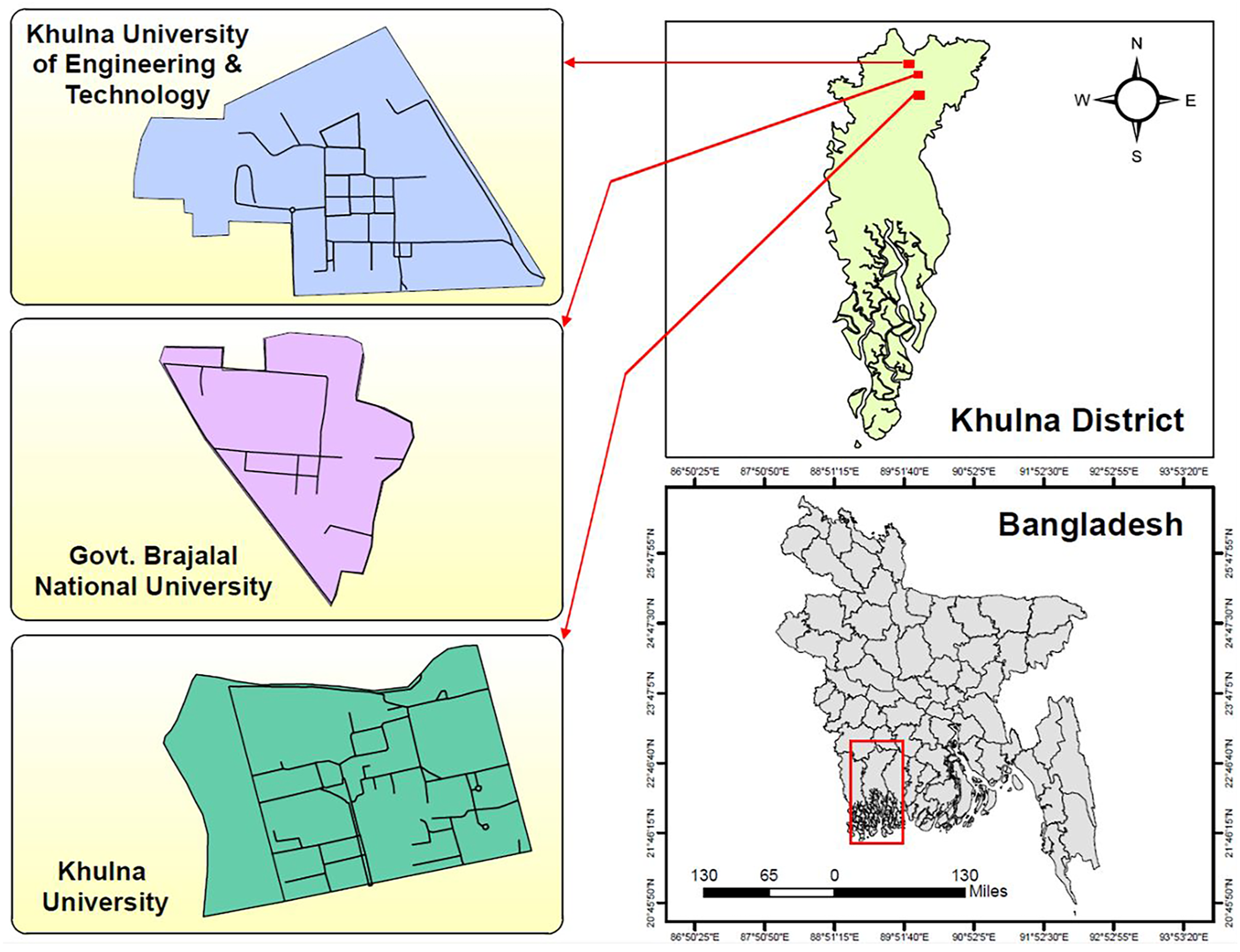
Khulna City, located in the southwestern coastal region of Bangladesh (22.49°N, 89.34°E), was selected due to its high exposure to climate risks such as salinity intrusion, flooding, water logging, and biodiversity loss. As a major divisional city near the Bay of Bengal and the Sundarbans, it represents a climatically vulnerable urban setting where environmental sustainability is critical.
To capture student perspectives, three major HEIs - KUET, BLNU and KU were selected. These institutions host students from across the country, providing a representative base to assess sustainability awareness and support more climate-responsive campus planning.
Methodology
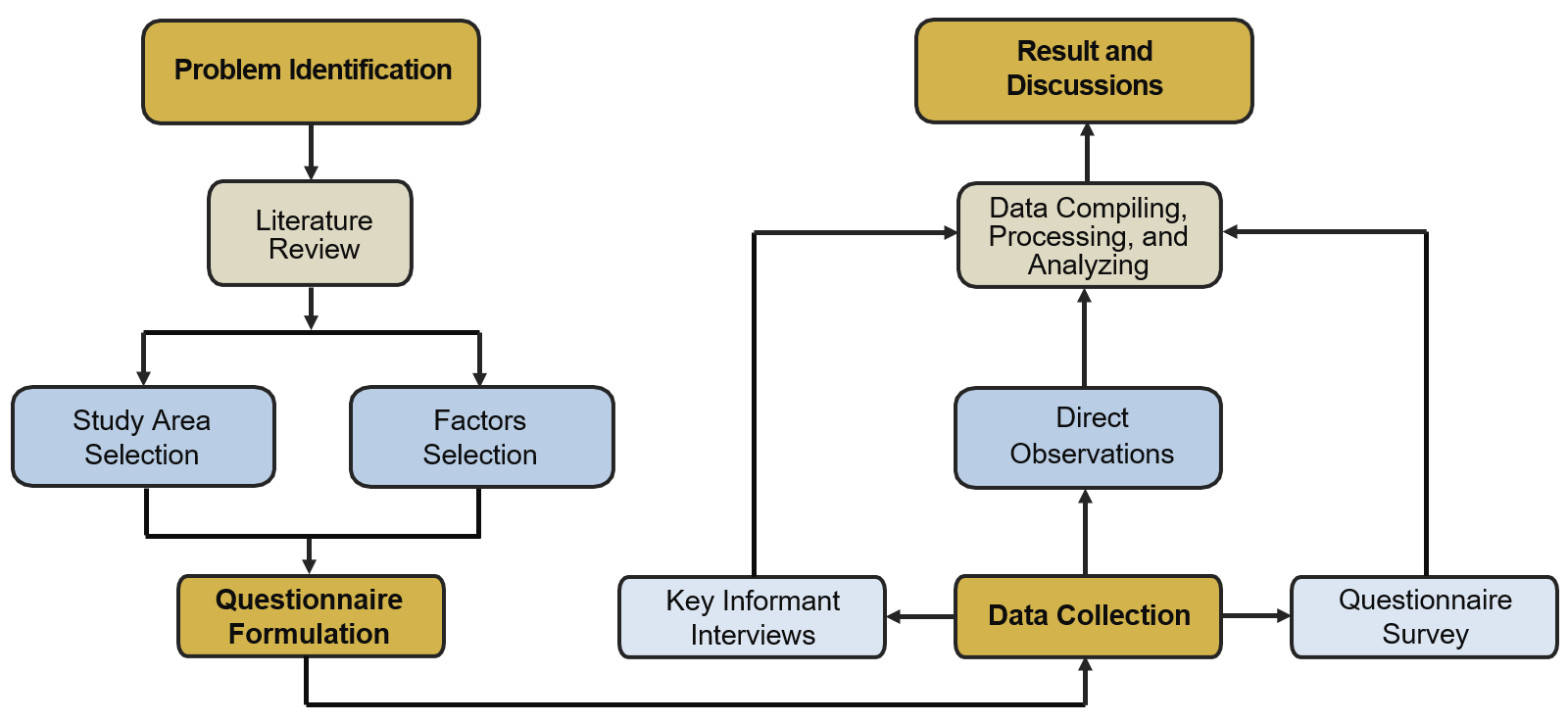
- Survey Design: Developed a structured questionnaire with five thematic sections (Awareness, Concern, Attitude, Willingness, and Recommendations).
- Data Collection: Conducted 200 student surveys across KUET, KU, and BLNU, representing different academic disciplines and residential settings.
- Variable Coding: Converted responses to categorical and Likert-scale variables for statistical analysis.
- Statistical Tests: Chi-square & Fisher’s Exact Test → association between institutional affiliation and ES awareness/behavior. ANOVA → difference in attitudes among universities. Spearman’s rho Correlation → correlation between awareness and willingness to act.
- Visualization: Generated charts and cross-tab results in SPSS for interpretation and presentation.
Key Findings (Waste and Water Management)
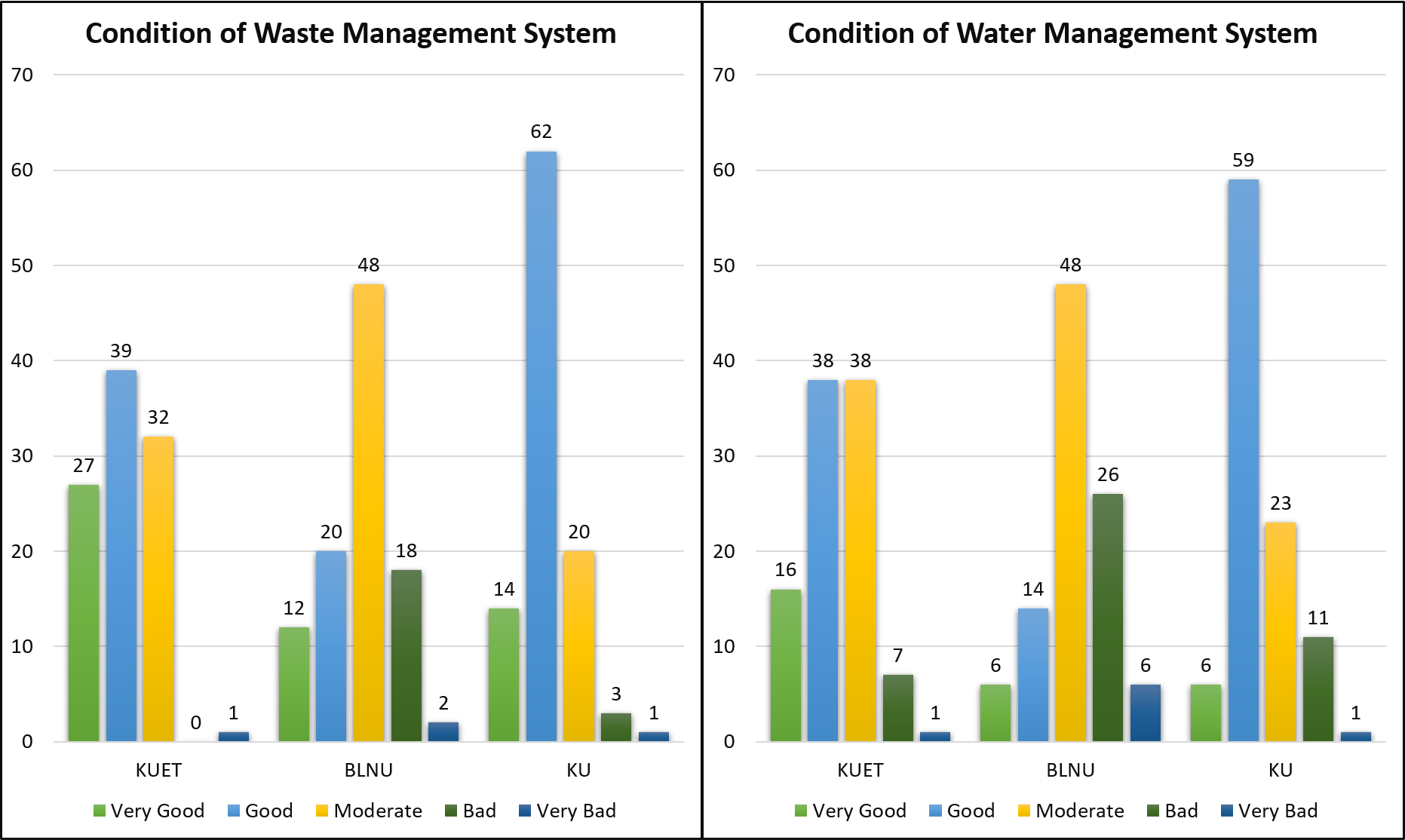
- A survey among students of KUET, BLNU, and KU evaluated waste and water management systems in residential halls using a five-point Likert scale.
- For waste management, KUET and KU performed well with about 66-76% positive ratings, while BLNU lagged with only 32% good responses and 20% reporting poor conditions.
- For water management, KUET and KU again scored higher (54-65% good or very good). In contrast, BLNU performed worse, with only 20% positive ratings, mainly due to salinity and the lack of treatment facilities.
- Statistical tests confirmed significant institutional differences, with Fisher’s values of 41 for waste and 37 for water management.
Key Findings (Awareness, Concerns & Attitudes)
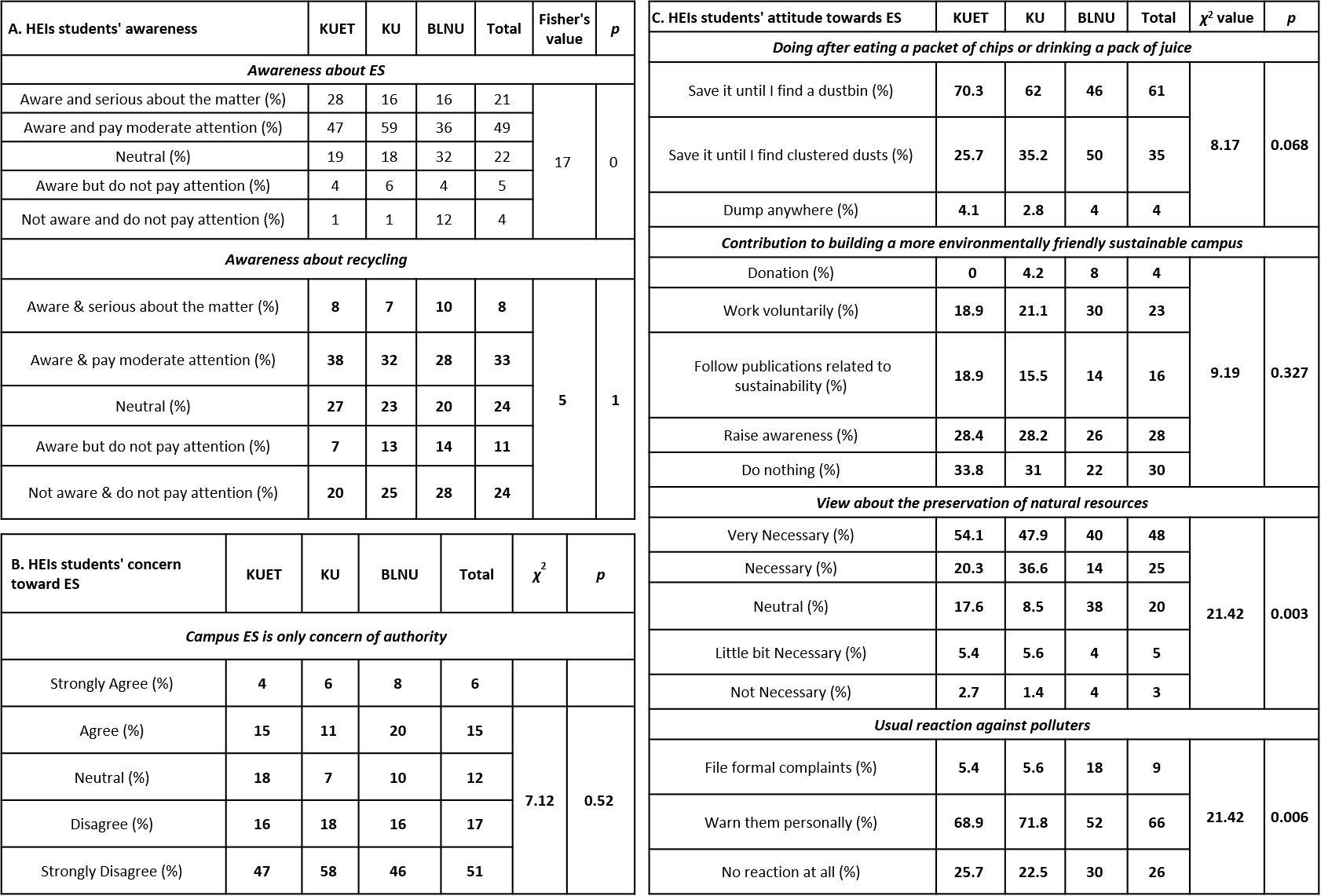
- Across KUET, KU, and BLNU, about 70% of students were aware of ES, though most gave it only moderate attention.
- Awareness of recycling was lower and statistically insignificant (p>0.05); nearly one-fourth of all respondents were unaware of it.
- Most students disagreed that campus sustainability is only the authority’s responsibility, with over 50% strongly disagreeing, showing shared concern.
- Attitudes were generally positive: about 61% keep waste until finding bins, and 66-72% personally warn polluters rather than ignoring them.
- Significant differences appeared in views on resource preservation (χ² = 21.42, p = 0.003) and responses to polluters (χ² = 21.41, p = 0.006), indicating varying levels of environmental engagement among universities.
Key Findings (Practices, Participations & Recommendations)
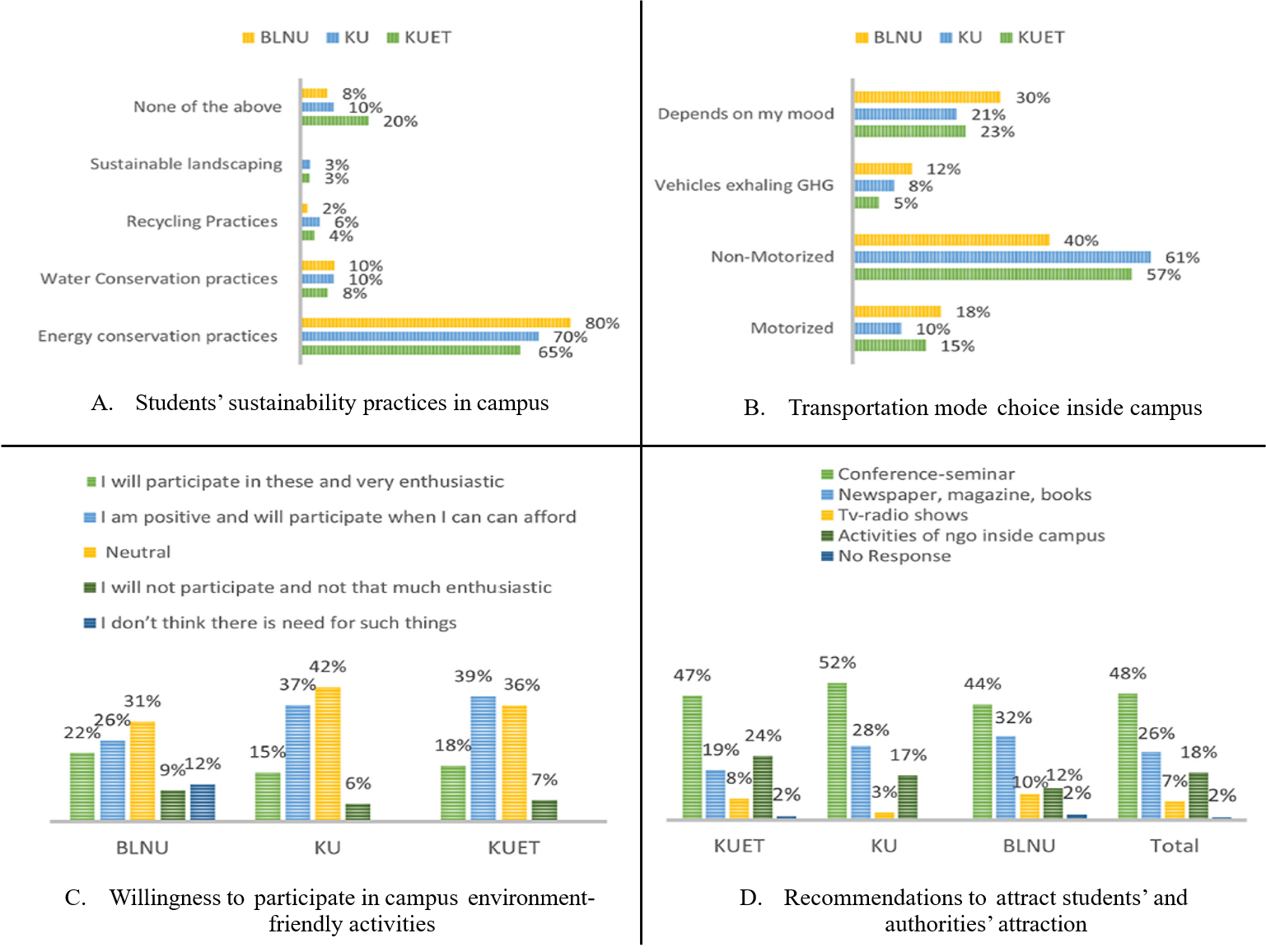
- Most students practiced energy conservation (80% BLNU, 70% KU, 65% KUET), while recycling and landscaping were least common.
- Around 10% at each university engaged in water conservation, and up to 20% of KUET students reported no sustainability practices.
- Non-motorized transport dominated campus travel (61% KU, 57% KUET, 40% BLNU), with minimal use of motorized vehicles.
- Only about 20% of students were highly enthusiastic about eco-friendly activities, showing low engagement overall.
- Nearly half of all respondents favored seminars and conferences as the most effective way to promote sustainability.